
PHP 8.0 Installation
Beschreibung
Installation php 8.0 und einfügen in ISPConfig
Installation
PHP 8.0 installieren
apt install php8.0 php8.0-cli php8.0-cgi php8.0-fpm php8.0-gd php8.0-mysql php8.0-imap php8.0-curl php8.0-intl php8.0-pspell php8.0-sqlite3 php8.0-tidy php8.0-xsl php8.0-zip php8.0-mbstring php8.0-soap php8.0-opcache php8.0-common php8.0-readline php8.0-xml php8.0-curl php8.0-imagick php8.0-bcmathDanach erstmal die Ursprüngliche Version als default festlegen
update-alternatives --config php
update-alternatives --config php-cgi
nun wählen:
Ausgabe:
  Auswahl      Pfad             Priorität Status
------------------------------------------------------------
* 0            /usr/bin/php8.2   82        automatischer Modus
  1            /usr/bin/php7.3   73        manueller Modus
  2            /usr/bin/php7.4   74        manueller Modus
  3            /usr/bin/php8.2   82        manueller Modus
Einfügen neuer Config
Unter System -> Zusätliche PHP Versionen
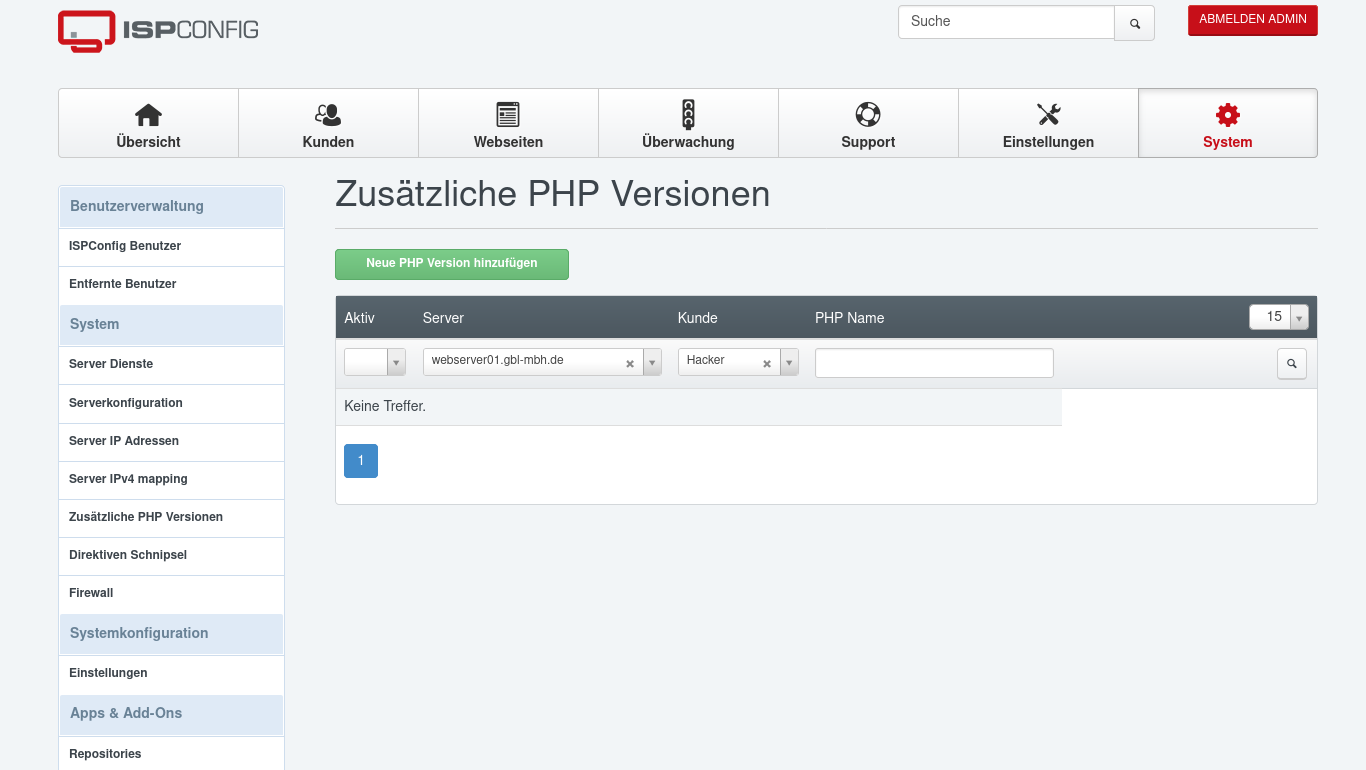
Dann auf PHP Version hinzufügen

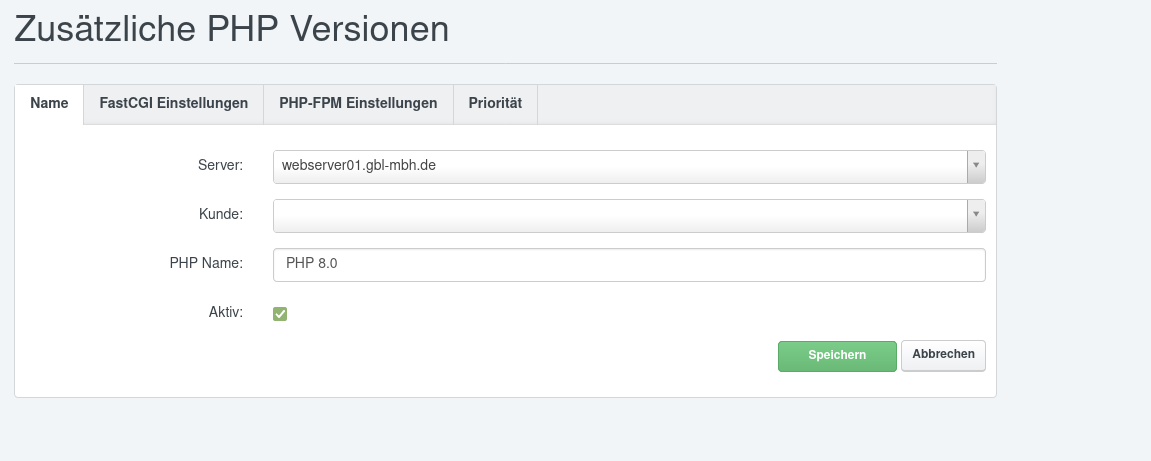
Diese Werte eintragen
Server: <Server> (unseren Server auswählen)
Kunde: leer
PHP-Name: PHP 8.0
Aktiv: Ja
Nun auf den Registerreiter FastCGI gehen
Pfad zum PHP FastCGI Binary: php8.0-cgi
Pfad zum php.ini Verzeichnis /etc/php/8.0/cgi/php.ini 
Nun auf den Register PHP-FPM Einstellungen
Pfad zum PHP-FPM Init Script: php8.0-fpm
Pfad zum php.ini Verzeichnis: /etc/php/8.0/fpm/php.ini
Pfad zum PHP-FPM Pool Verzeichnis: /etc/php/8.0/fpm/pool.d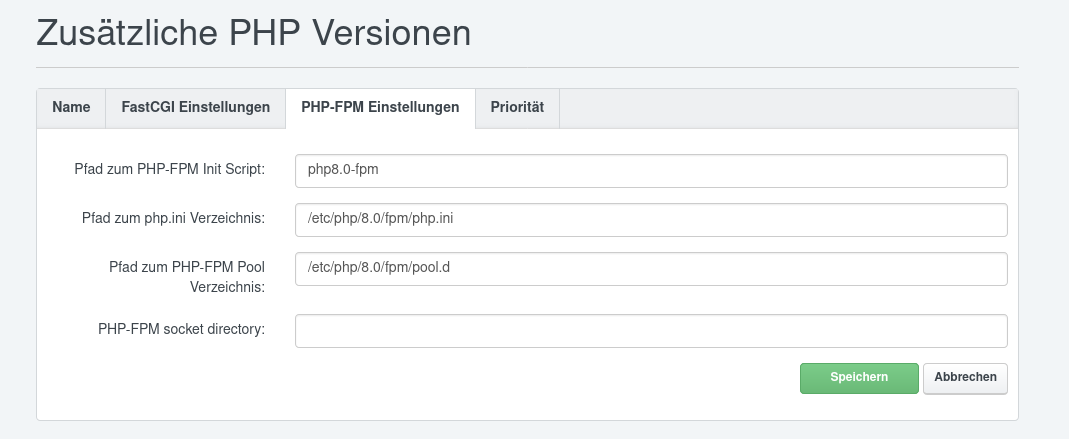
Nun auf Speichern klicken